


- Home
- >
- Case
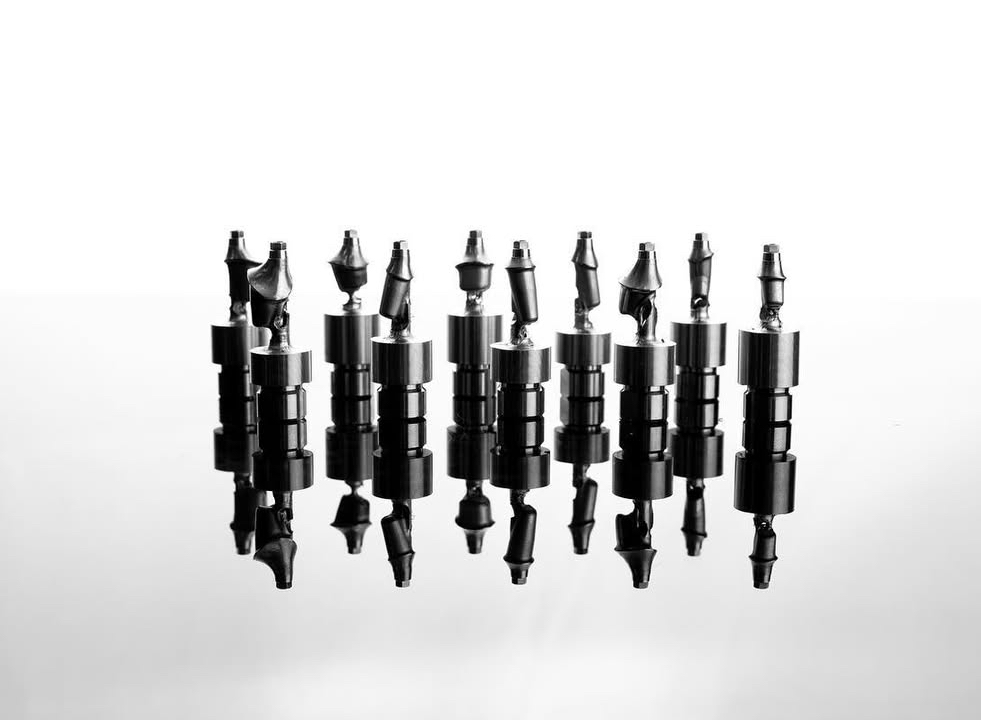
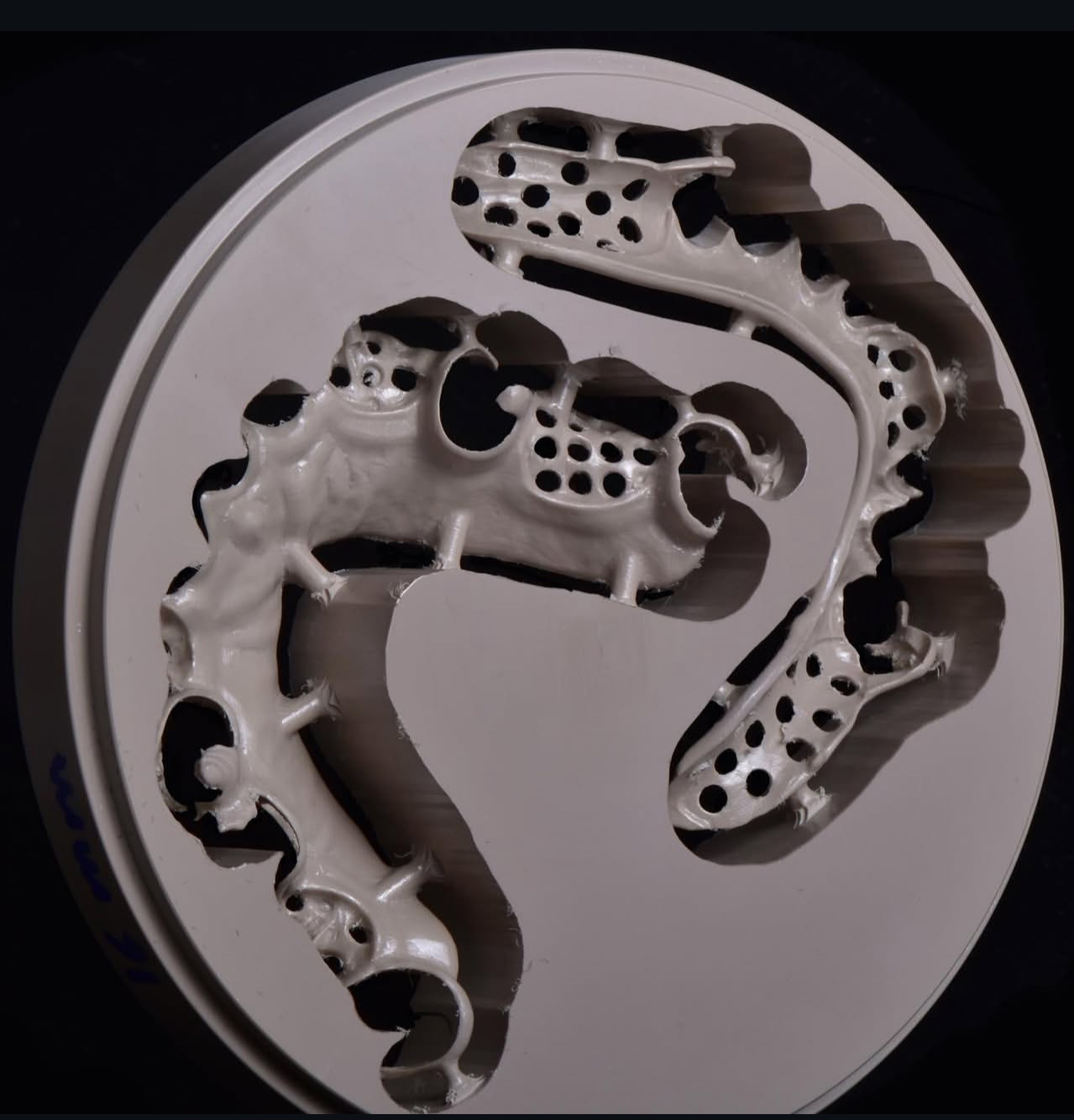
Dental titanium disc cutting case
1. Oral Data Acquisition and Modeling: Scan the patient's oral cavity or plaster model to obtain 3D data. Use CAD software (such as Exocad) to design the shape of denture components such as implant abutments and titanium frameworks, generating CAM machining paths.
2. Titanium Disc Clamping: Select a titanium alloy disc of appropriate thickness and fix it on a special fixture of the dental milling machine. Due to the high hardness of titanium, it requires the use of carbide cutting tools.
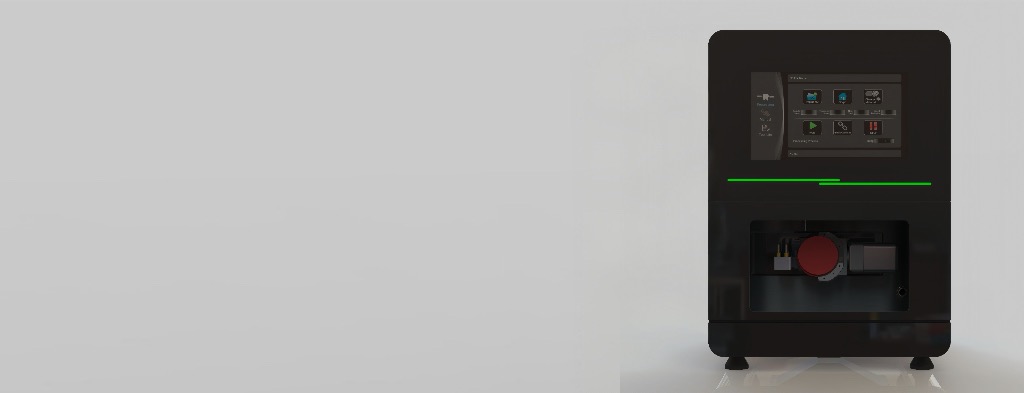
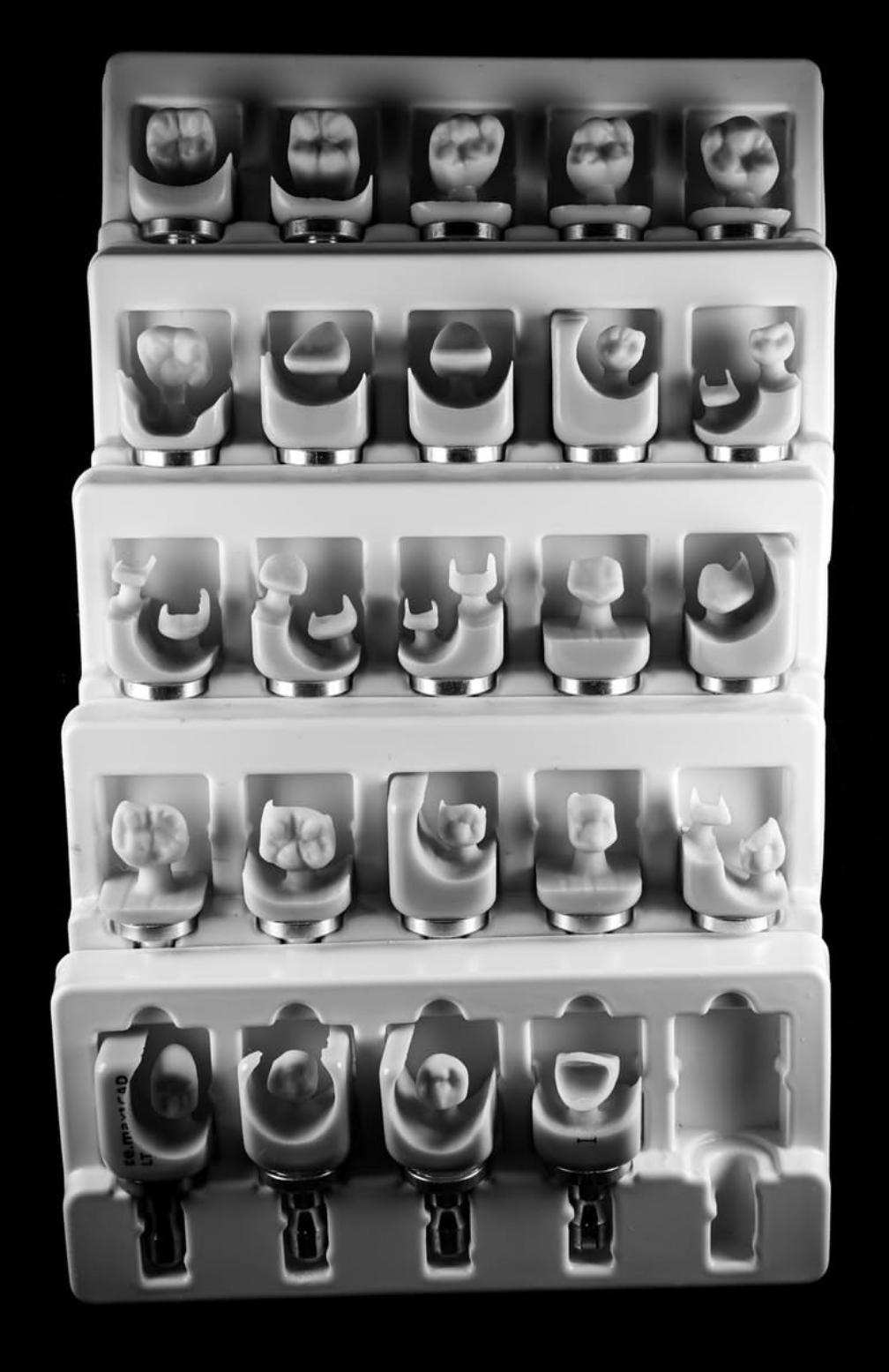
3. CAM Wet Cutting: Start the dental milling machine for wet cutting (Note: Titanium cutting requires coolant to prevent material deformation or tool wear). Cut the disc into a denture rough blank according to the designed path.
4. Rough Blank Grinding and Deburring: Use a grinder and sandpaper to remove burrs and machining marks from the edges of the rough blank, and finely adjust the fit and shape of the components.
5. Surface Treatment
The core steps are sandblasting (using alumina powder to increase surface roughness and enhance adhesion to the resin) + pickling (removing the surface oxide layer and impurities). Some high-end products will also undergo anodizing to achieve customized colors and improve biocompatibility.
6. Sterilization and Quality Inspection
Finished products undergo high-temperature and high-pressure sterilization. Dimensional accuracy, surface smoothness, and biocompatibility are checked. Products that pass inspection are then put into use.
Consultation